

FENAC
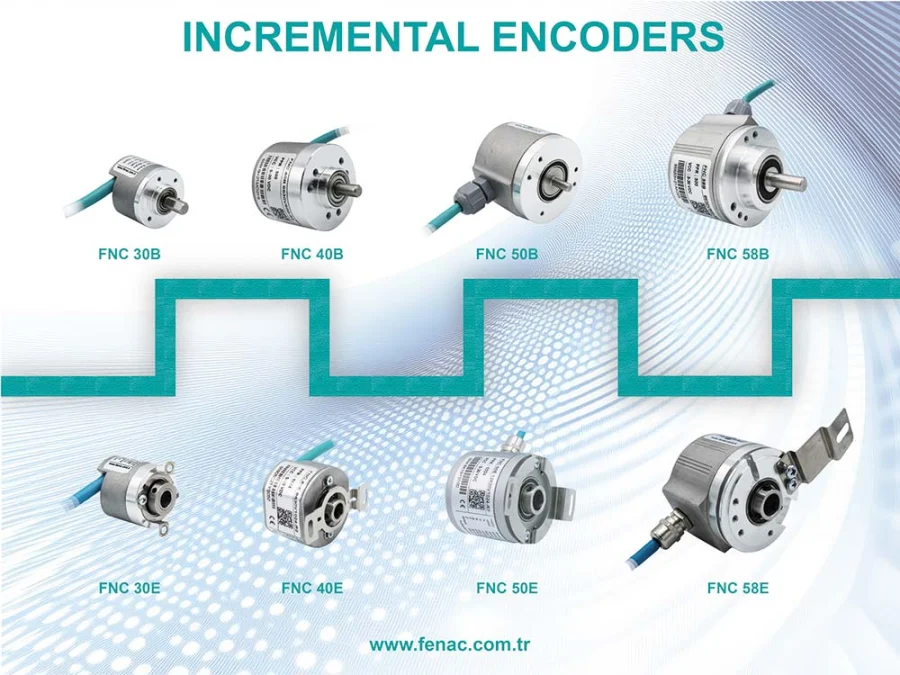
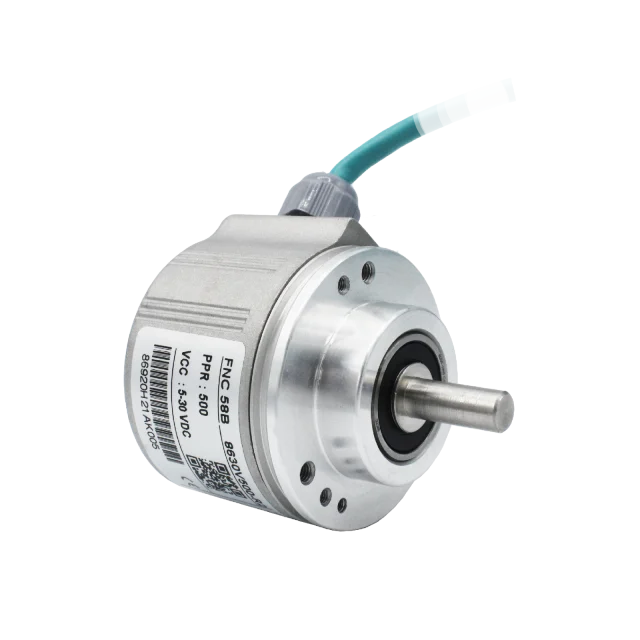
Incremental Rotary Encoder
Incremental encoders generate pulses as the shaft rotates; the controller counts these pulses to derive speed, direction and relative travel information. Since no absolute position information is retained, the system goes to a reference point on every power-up. Conveyor speed feedback, web-length tracking in winding-unwinding units and cut-length measurement are typical application areas. In this family, Fenac offers solid-shaft, semi-hollow, through-hollow and taper-shaft housing options.
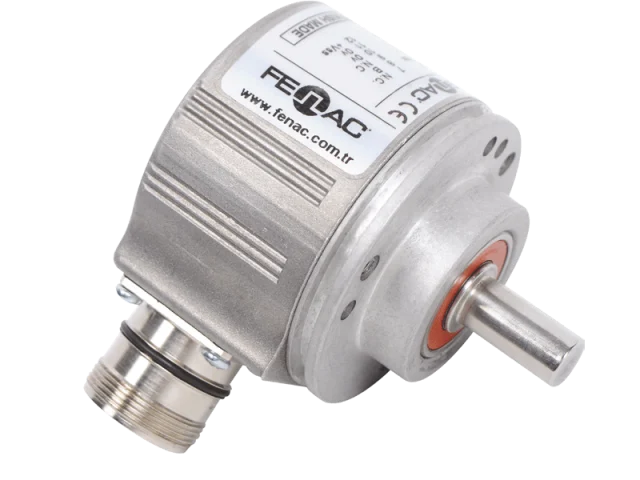
Absolute Rotary Encoder
In an absolute encoder, a unique code value corresponding to each angular position of the shaft is read; when power is lost and restored, the position information is not lost and no reference-search step is required. This behavior is decisive in crane hoisting-traversing axes, rotary tables and cover/valve position tracking, where the load must continue from where it was after a stop. Single-turn versions give the angle within one full revolution, while multi-turn versions also provide the number of revolutions. Fenac's absolute range includes versions with SSI/BiSS, parallel and analog outputs.
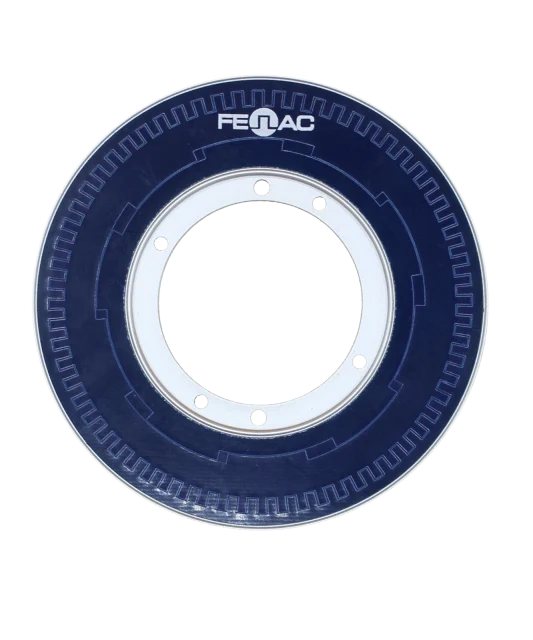
Inductive Rotary Encoder
Inductive encoders derive position from the change in inductive coupling between a rotating target and a fixed coil layer; there is no optical disc or permanent magnet inside. Thanks to this structure, measurement stability is maintained in environments with heavy dust, oil vapor, humidity, shock and external magnetic fields. They are preferred at points where optical encoders struggle, such as shipyard and crane sites, heavy-industry drive groups, and around presses and rolling mills. Fenac offers this family with large-bore types in different housing diameters.
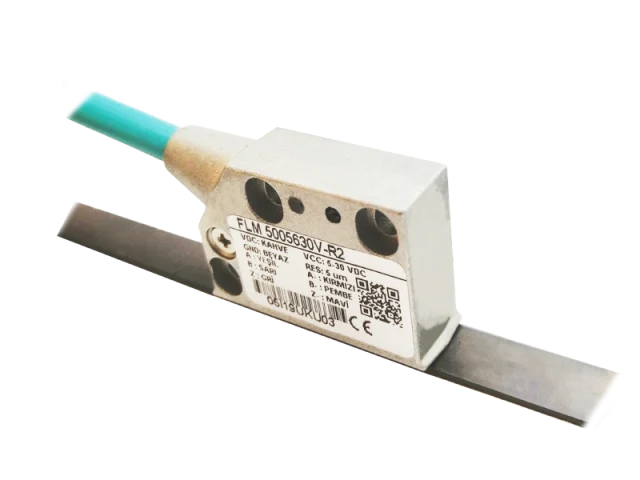
Linear / Magnetic Linear Encoder
Magnetic linear encoders consist of a coded magnetic tape laid along the axis and a read head that moves over it without contact, measuring linear travel directly. Because the measurement is not converted into rotary motion, errors caused by belt, rack or gear backlash do not enter the chain. Since the head and the tape do not touch, there are no wearing parts and the measuring length can be extended to the length of the tape. Gantry axes, press die position, cutting tables and long-stroke pusher-carrier arrangements are common applications.
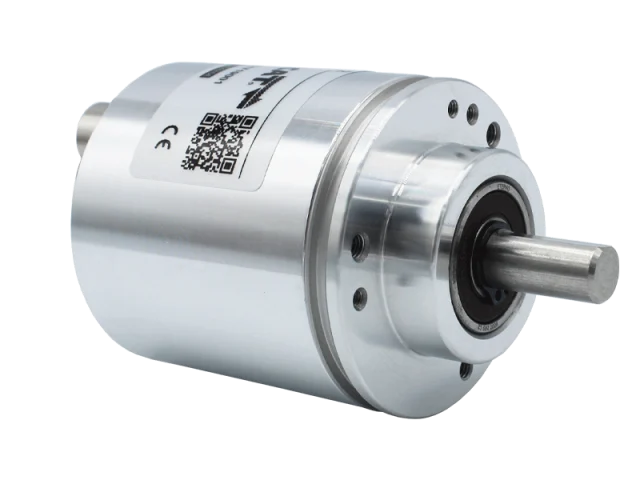
EtherCAT Encoders
These encoders transmit position information over the EtherCAT line as a slave device on the network, instead of through a separate signal cable. Because they are included in the controller's synchronous motion cycle, the position data of multiple axes can be evaluated on a common time base; this is important in motion applications where servo axes follow one another. The ability to connect devices in series reduces the number of cables between panel and field. In this family, Fenac offers axial and radial connector outlet, solid-shaft and hollow housing options.
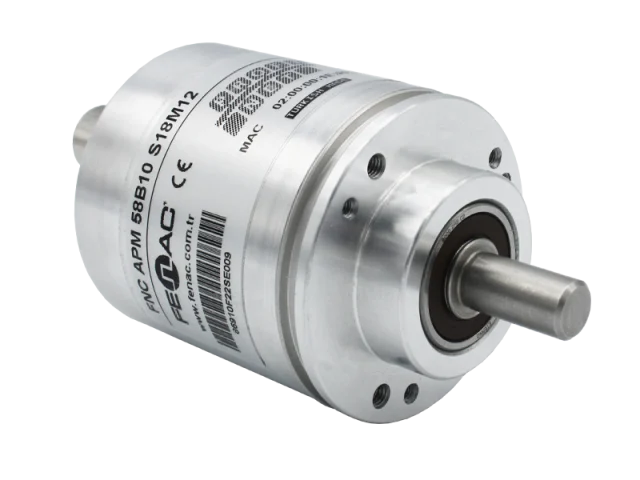
PROFINET Encoders
PROFINET encoders join Siemens-based automation networks directly as a field device; after the device description file is added to the project, settings such as resolution, counting direction and zero point are made from the controller project instead of switches on the hardware. Since diagnostic and status information can also be read over the same line, fault-finding time is shortened, and on device replacement the parameters are restored from the controller. On packaging, paper and processing lines with an existing PROFINET backbone, they are commissioned without additional gateway hardware.
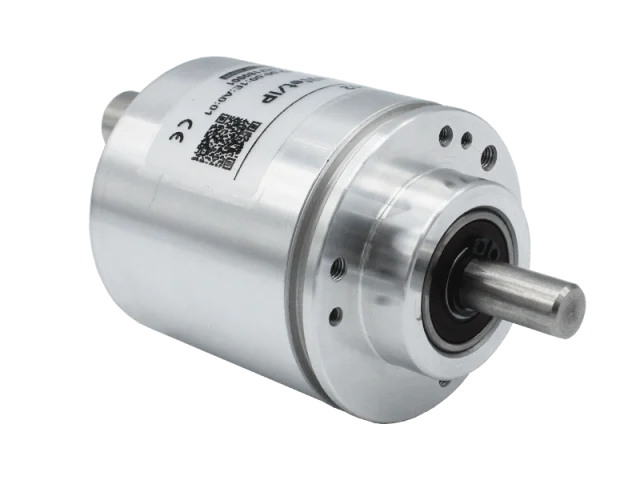
EtherNet/IP Encoders
Encoders with an EtherNet/IP interface carry position data over the factory's existing Ethernet infrastructure in facilities where Rockwell/Allen-Bradley controllers are common. Because standard network hardware is used, the encoder is addressed on the same line as the drives and remote input-output stations; there is no need to run a separate fieldbus. On the controller side, it is defined from the device catalog and the position and speed values are bound directly to tags. In revisions to brand-independent lines, it is preferred for compatibility with the existing PLC ecosystem.
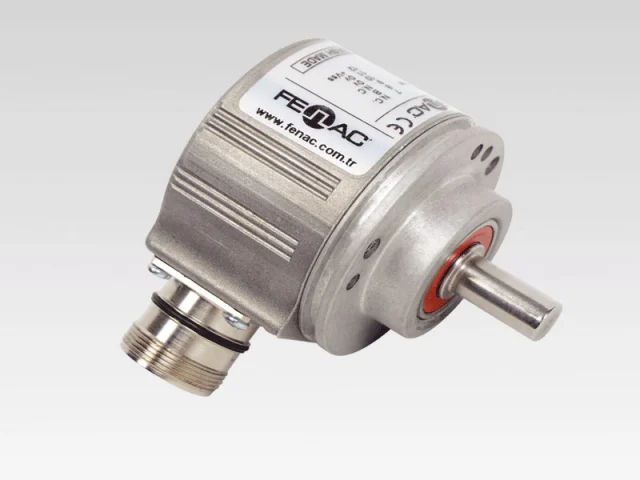
CANopen Encoders
CANopen encoders transmit position information over the CAN bus, in a structure where many devices share the same two-wire line. CAN's differential-signal structure keeps communication stable in fields with high electrical noise and long cable distances. Through the device profile, resolution, counting direction and data transmission behavior can be set over the bus, so the encoder is reconfigured without being removed from the machine. It is common in mobile and demanding applications such as mobile work machines and port and shipyard cranes.